
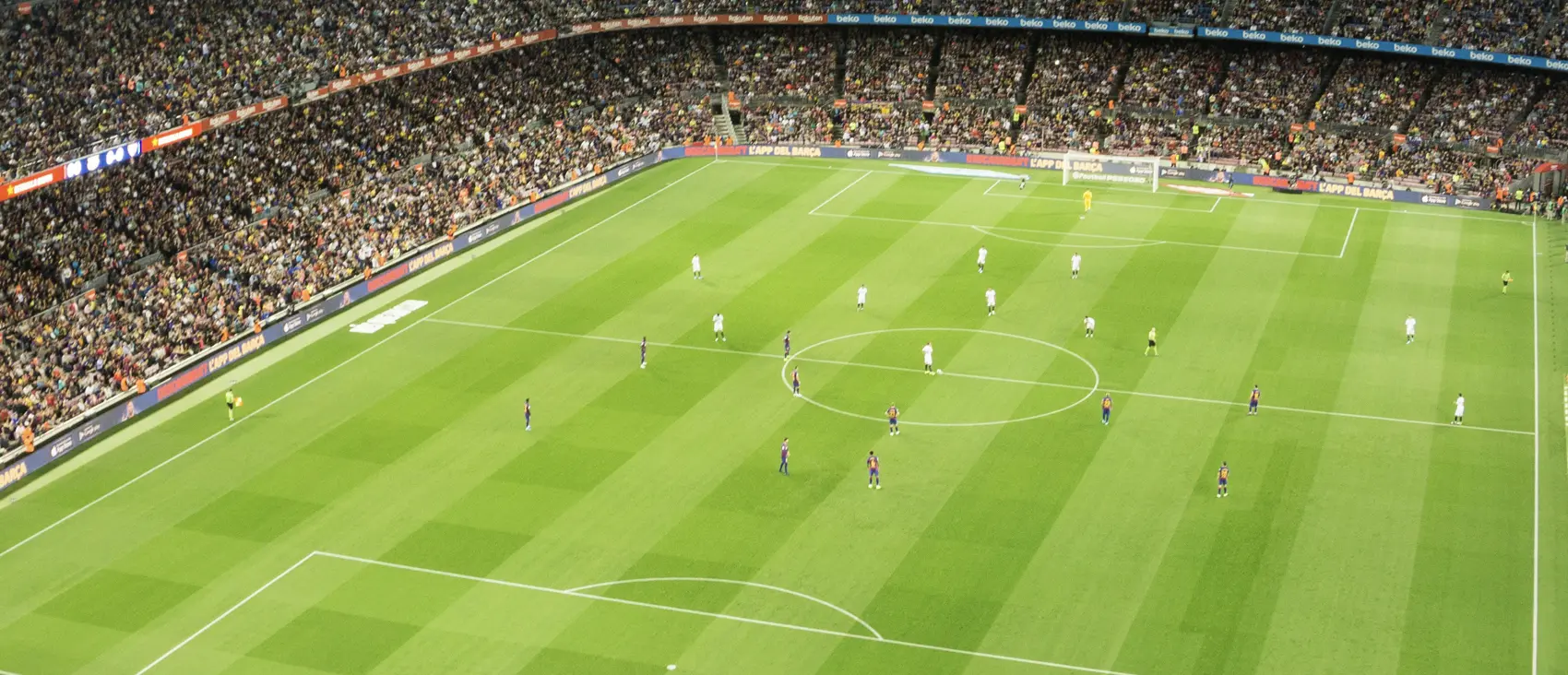
The difference between watching football and analysing football.
All coaches watch football. Many wish they would see more and see it earlier. It is often the situations that trigger most attention or emotions that are dominating an analysis. But were these situations part of a larger pattern, or just accidental? And what other dominant strenghts and weaknesses were overshadowed by the emotionally charged incidents?
The real problem is not knowledge — it is delayed recognition
Most coaches already understand football. It is not about a lack of effort or tactical information either. The real problem is this: many coaches eventually recognise the important patterns in a game — but too late to really help their team make a difference in the game.
A coach notices too late that the opposing team is creating overloads in a specific area on the pitch. An analyst needs too much time to identify which player’s actions are destabilising the defending back line. An assistant coach recognises that something is wrong in the pressing organisation, but cannot immediately identify where the problem starts.
When coaching your team during a game, the timing of recognition changes everything. If important patterns are seen too slowly, tactical adjustments become reactive instead of proactive.
Most people analyse execution instead of actions
There are five potential reasons for an incorrect football action. For example, there might be a miscommunication between players. Or maybe the player should have chosen a different individual intention. Did the player choose the wrong position, moment, direction or speed to accomplish the intention? It could also have been a matter of not being able to correctly execute the chosen position, moment, direction or speed. Finally, fatigue can be the cause of the incorrect action due to a lack of football fitness.
Of these five potential explanations for something going wrong on the pitch, only one is visible from the outside: what the player is executing. That is why many people make the thinking mistake that the technical execution is the same as the action. They think ‘execution = action’. If a player performs an incompetent ‘passing’ action, people immediately conclude that this player’s technique is insufficient. Our brains think that only visible things exist so, initially, it does not take anything into account that cannot be seen at that moment. This brain bias is called ‘What You See Is All You Describe’ (WYSIATI). Coaches should not guess at the decisions of the players as they cannot look into the players’ brains. The only way to find out about decisions and choices would be by asking the players.
This means that coaches and analysts can only describe from the outside what they see players execute. They cannot evaluate what a player TRIED to accomplish (decision) but only what the player DID accomplish (execution). This execution is not necessarily aligned with the decision. A player might correctly execute an incorrect decision or incorrectly execute a correct decision. In both cases, the player performs an incorrect action, but the difference is invisible when analysing clips.
However, coaches and analysts who are able to identify the most dominant patterns in what teams and players executed (DID), will still be able to develop a relatively reliable impression of the intentions (TRIED) of these teams and players. So, how good are you at recognising patters to discover the most dominant strengths and weaknesses? And what objective framework do you use to avoid being misled by impactful incidents?
Watching and seeing are two different things
Elite analysts often recognise patterns earlier. Not because they are more talented but because they have a structured way of looking. They start with a broader view to stay zoomed-out as much as possible to keep situational awareness, and only use a more narrow view to zoom-in as much as necessary.
They are not only observing behaviours (actions). They are searching for:
- Collective intentions — The team is (not) accomplishing a team intention: what, where, who, when and which?
- Individual intentions — A player is (not) accomplishing an individual intention within a team intention: what, where, who, when and which?
- How team and individual intentions interact
- Structural strengths and weaknesses
Once those patterns become visible, the game becomes easier to interpret. The speed of recognition improves. Decisions improve. Tactical adjustments improve. The team improves.
Better analysis is trainable
One of the biggest myths in football is that elite analysis is mainly intuition. It is not. Speed of recognition comes from repeated exposure to patterns — combined with a structured analytical framework. That process can be developed. Not by watching more random games. But by analysing games with structure.
By learning to separate actions from intentions. By consistently asking better analytical questions:
- What is a team doing, not sometimes but most of the time?
- How does a player contribute to the team, not sometimes but most of the time?
- Where do the most dominant (un)successful patterns start, and where do they end?
This summer, that is exactly what we will do inside the online course: 2026 World Cup Tactical Analysis.

You may also like


Football fitness does NOT improve players